
 Image 1 of 1
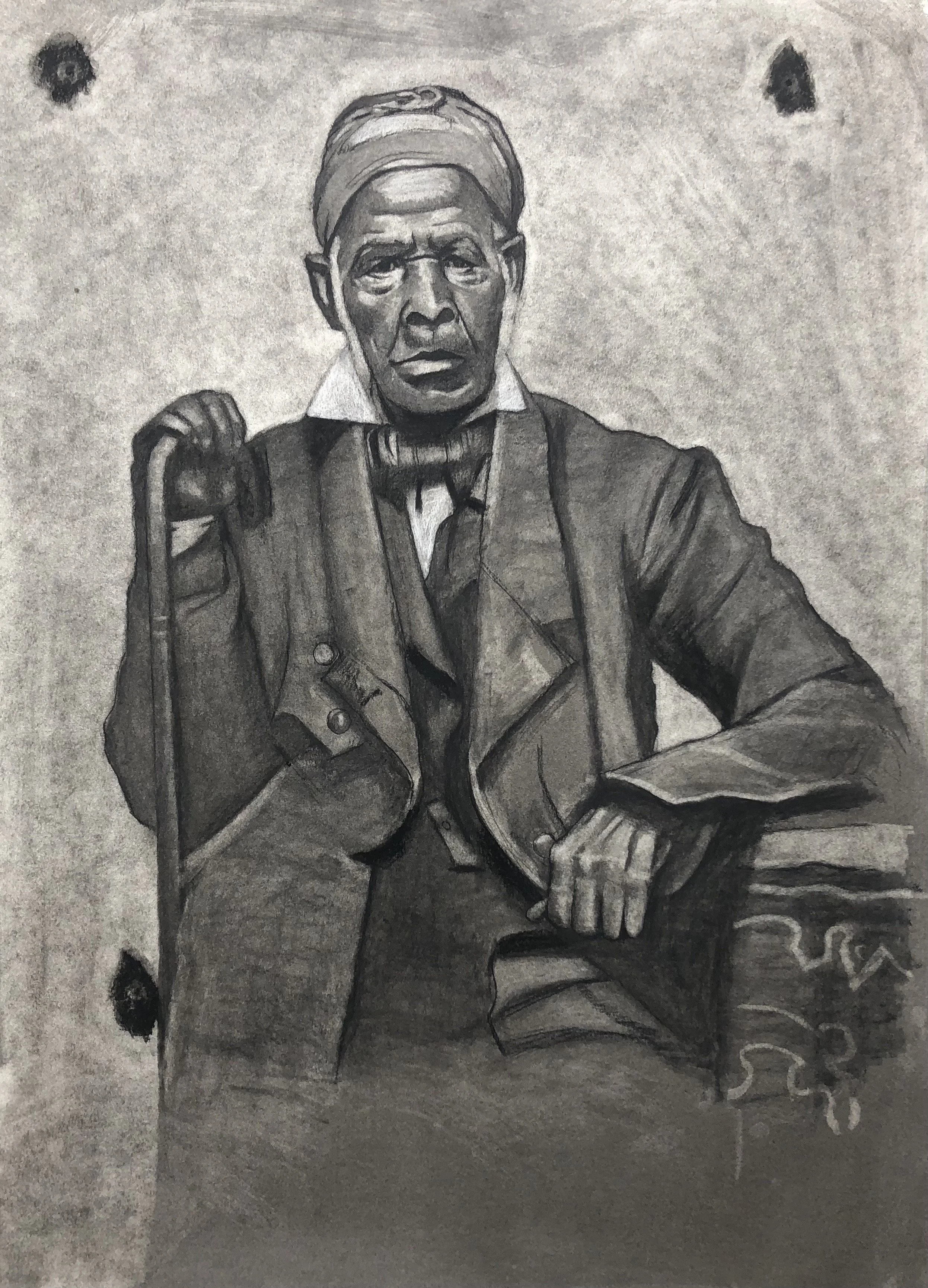
A charcoal drawing portrait of Omar Ibn Said, the West African Islamic scholar enslaved in North Carolina for over fifty years, best known as the author of the only known surviving autobiography written in Arabic by an enslaved person in America. Born to a devout, educated Muslim family in Futa Toro (present-day Senegal), Said carried his faith and scholarship with him even in bondage, writing across walls, manuscripts, and margins in the language of his homeland — a quiet, persistent act of resistance and self-preservation. Depicted here leaning on a cane in formal dress, the portrait honors his dignity and intellect, and stands as a direct historical counterpart to the Islamic West African heritage referenced in the artist's Musa — a reminder that the enslaved Africans brought to America carried with them rich traditions of literacy, faith, and learning that colonial systems worked to erase.
Original artwork, hand-drawn in charcoal on paper.
A charcoal drawing portrait of Omar Ibn Said, the West African Islamic scholar enslaved in North Carolina for over fifty years, best known as the author of the only known surviving autobiography written in Arabic by an enslaved person in America. Born to a devout, educated Muslim family in Futa Toro (present-day Senegal), Said carried his faith and scholarship with him even in bondage, writing across walls, manuscripts, and margins in the language of his homeland — a quiet, persistent act of resistance and self-preservation. Depicted here leaning on a cane in formal dress, the portrait honors his dignity and intellect, and stands as a direct historical counterpart to the Islamic West African heritage referenced in the artist's Musa — a reminder that the enslaved Africans brought to America carried with them rich traditions of literacy, faith, and learning that colonial systems worked to erase.
Original artwork, hand-drawn in charcoal on paper.